MEMBER RESOURCES
Resources for New Brunswick's Non-Profit Housing Sector
Whether you're developing new housing, strengthening your board, looking for funding, or managing the day-to-day needs of your organization, you don't have to start from scratch.
This resource library brings together practical tools, guides, funding opportunities, contacts and information to support non-profit housing organizations across New Brunswick.
Browse the categories below to find resources to help your organization build capacity, navigate challenges and continue providing safe, sustainable and affordable housing in your community.
Please note: This resource library is a work in progress. We're continuing to add and update resources regularly, so check back often to see what's new.

TOOLKITS & TEMPLATES

HOUSING DEVELOPMENT

FUNDING & GRANTS

OPERATIONS & MAINTENANCE
GOVERNANCE & BOARD

CONTACTS & SUPPORTS
FEATURED RESOURCES
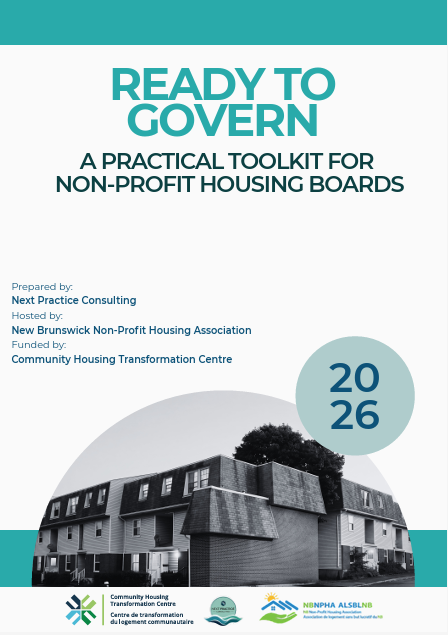
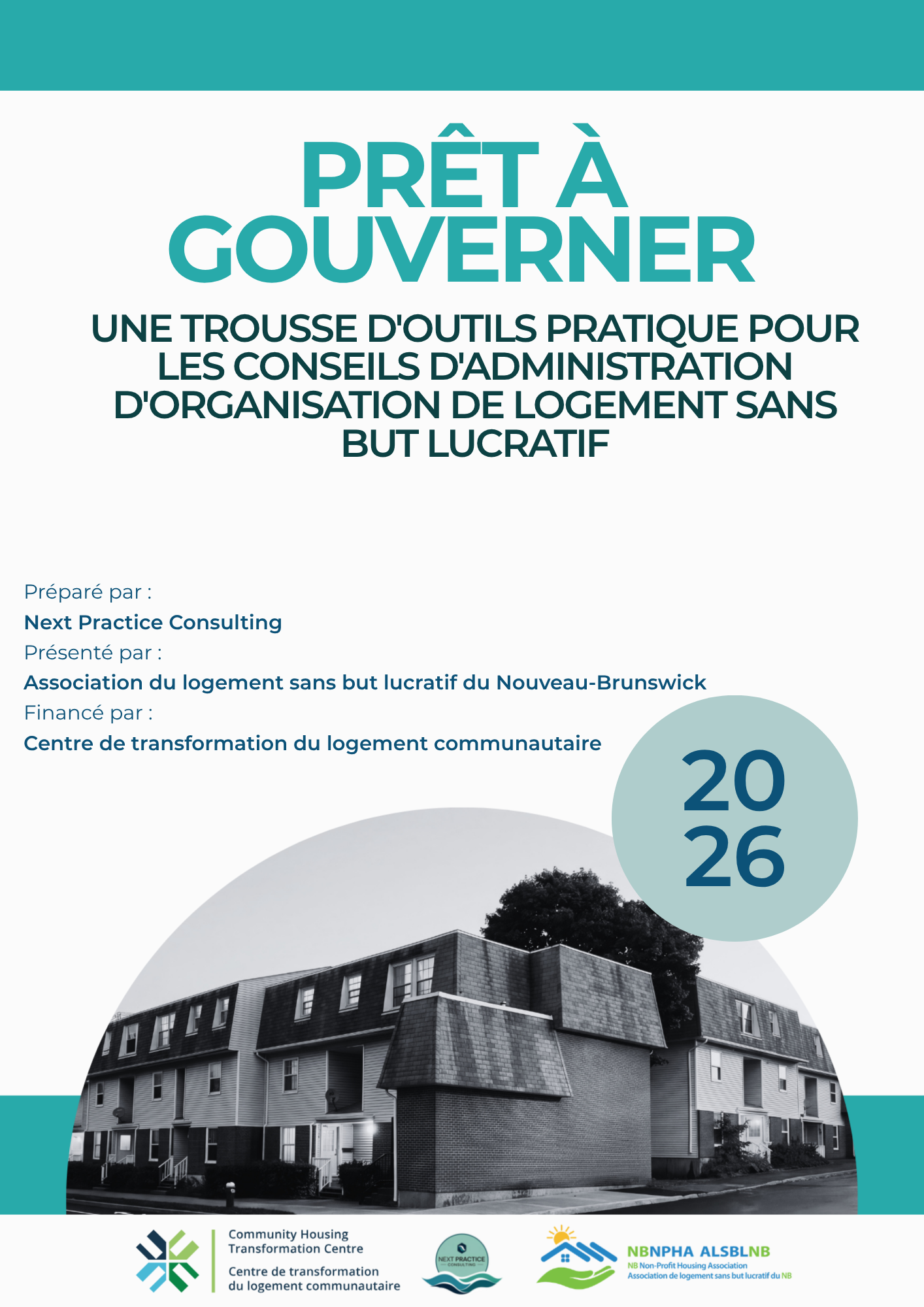
READY TO GOVERN A PRACTICAL TOOLKIT FOR NON-PROFIT HOUSING BOARDS
Ready to Govern is a practical, easy-to-use toolkit designed for small and community-based non-profit housing organizations. It is intended to help board members, board chairs, treasurers, Executive Directors, and senior staff understand the core governance responsibilities that support strong, safe, and sustainable housing organizations. The toolkit focuses on what boards need to know, what documents and practices should be in place, and how to strengthen governance without creating unnecessary complexity.
Many non-profit housing providers are led by dedicated volunteers and staff who care deeply about their tenants and communities, but who may be working with outdated bylaws, informal practices, unclear board/staff roles, or limited access to governance support. This toolkit responds to those realities by offering clear explanations, simple tools, practical examples, and “good enough” starting points that organizations can adapt to their size, capacity, and stage of development.
The toolkit is organized around the foundations of good governance, minimum governance documents and policies, right-sized risk and financial oversight, housing-specific board responsibilities, responsible use of Artificial Intelligence (AI), and pathways for additional support. It is not legal advice, financial advice, or a substitute for professional support when needed. Instead, it is a starting place: a guide to help boards ask better questions, make clearer decisions, reduce avoidable risk, and govern in ways that protect both the organization and the people who rely on its housing.